
















دليل ترقية لوحة العدادات الرقمية لسيارة أودي Q5 (2009–2017)
If you still drive a first-generation Audi Q5 (8R, 2009–2017), you already know one thing very well: the car itself still feels solid, but the instrument cluster looks old. The part you look at most – the gauges in front of you – is also the part that has changed the least since the car was new.
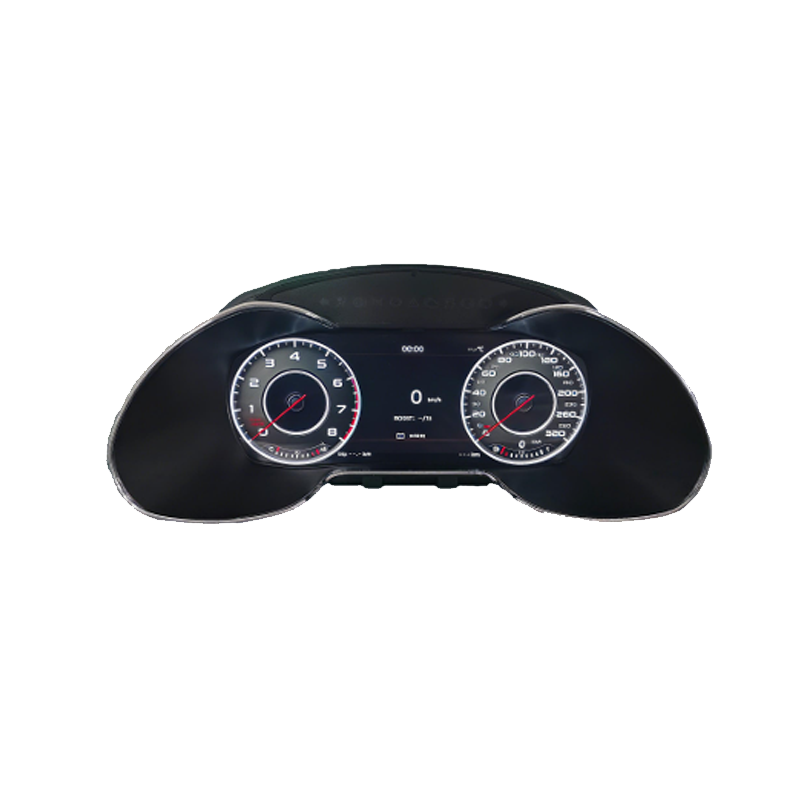
This article is about replacing that cluster with a Audi Q5 Digital Instrument Cluster 2009–2017, a 12.3" LCD panel that takes the place of the original analog dials. It is a retrofit, not a new car, but it changes the way the Q5’s interior feels every time you start it. The product itself is here: Audi Q5 Digital Instrument Cluster 2009–2017, 12.3" LCD .
From Analog Dials to a Digital Dash
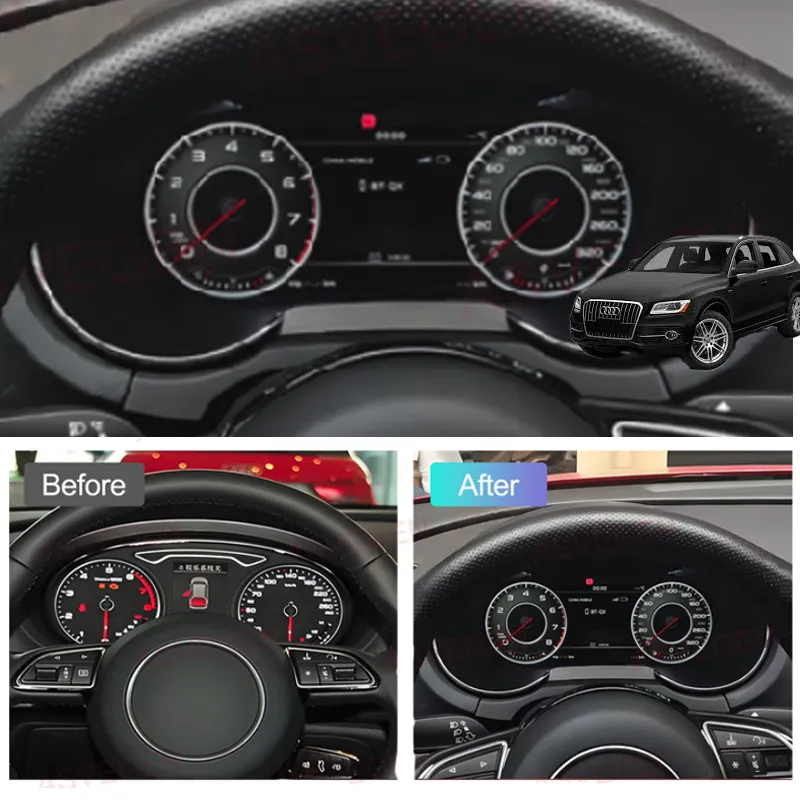
The factory Q5 8R cluster does its job: you get a speedometer, a rev counter and a small central display. It is simple, familiar and a bit flat. Once you have sat in a newer Audi with a digital dash, the difference is hard to ignore. The rest of the interior can still look fine, but the cluster instantly tells you which decade the car came from.
Audi calls its factory full digital panel the Audi virtual cockpit. Newer models use a 12.3" high-resolution screen instead of separate dials, and the driver can switch between classic gauges, performance views and navigation-focused layouts. The retrofit Audi Q5 Digital Instrument Cluster 2009–2017 takes the same idea and adapts it to the first-generation Q5: one wide display directly in front of you, with more information and more flexibility than the original analog cluster.
What Actually Changes When You Drive
On paper you are “just” swapping one cluster for another. On the road, the change is more about how you read the car. Three things stand out for most owners.
- The way you read speed and revs. With the analog cluster, you often need a slightly longer glance to be sure of your speed, especially at night or in heavy traffic. With the digital cluster you get a clear numeric speed readout and a more legible scale. It sounds trivial, but you notice it every time you pass a speed camera or a changing limit.
- What you can see without looking away. The LCD can show speed, RPM, fuel and temperature, but also tyre pressure status, open-door warnings and simple navigation prompts in the same field of view. You do not have to keep shifting your eyes between the cluster and the center screen as often.
- How modern the cockpit feels. The original Q5 cluster looks like the era it was built in. The digital one looks like the cars Audi sells now. The dashboard shape is still the same, but the driver’s view no longer says “old car” every time you sit down.
Who This Upgrade Makes Sense For
This is not an upgrade for everybody. If your Q5 is a second car that you take out once a week, the analog cluster will continue to do its job. The digital cluster is for owners who:
- Drive the Q5 daily and want the interior to feel up-to-date
- Do long motorway trips or regular night driving
- Have already upgraded the center head unit and now feel the cluster is the weak link
- Plan to keep the car long enough to justify a serious cockpit upgrade
If you recognise yourself in that list, the Audi Q5 Digital Instrument Cluster 2009–2017 is worth putting on the shortlist. It does not change the engine or the chassis, but it changes what you see and touch most often.
Supported Audi Q5 8R Model Years (2009–2017)
The cluster is designed for the first-generation Audi Q5 on the 8R platform, roughly model years 2009–2017. That covers:
- Early petrol models (2.0 TFSI, 3.2 FSI in many markets)
- Diesel models such as 2.0 TDI and 3.0 TDI
- Pre-facelift and facelift Q5 8R versions
- Front-wheel drive and quattro, depending on market
There are exceptions. Cars that have been heavily repaired at the front, fitted with non-original wiring or retrofitted with unusual electronics can behave differently. Before you order anything, it is sensible to:
- Check the VIN and production year
- Take a clear photo of the original cluster while it is powered on
- Take a photo of the back of the cluster with the connectors visible
With those three images, a specialist can normally tell you if the Q5 is a straightforward candidate or if there are signs that something is non-standard behind the dashboard.
Hardware and Performance: Not Just a Screen Glued In
From the outside you see a 12.3" screen. Inside there is a dedicated board built for automotive use. The goal is not to install a tablet; the goal is to have a cluster that wakes up quickly, survives heat and cold and runs the same way every day.
- البرامج الثابتة للسيارات المستندة إلى Linux
- Quad-core processor with a GPU for smooth gauge animation
- 8 GB flash for themes, layouts and updates
- Boot time around 3 seconds from ACC ON
- 1920 × 720 resolution on a 12.3" wide panel
- Tested operating range from about –35 °C to +80 °C
- Bluetooth 4.2 and 802.11 b/g/n Wi-Fi
- Menu support for 12 languages
None of this turns the Q5 cluster into a full infotainment unit, and that is a good thing. The car already has a head unit for apps. The cluster’s job is to show driving information clearly and reliably.
What Happens to the Original Q5 Electronics
A common concern is: “Will I lose my warning lights or mess up diagnostics?” The idea of this retrofit is the opposite. The cluster is meant to sit on top of the existing electronics, not replace them blindly.
On a healthy car with a correct installation you should still see:
- ABS, airbag, check-engine and brake warnings
- Turn indicators, high beam and fog light status
- Odometer and trip readings
- Service reminders and basic fault icons
The cluster does not create sensors that are not there. If your Q5 never had a certain driver assistance function, the digital cluster will not magically add it. It simply gives you a more modern way to see the information the car already has.
Steering-Wheel Buttons and Wiper Controls
Many people hope a digital cluster will fix old steering-wheel or stalk issues. It will not. The cluster can only respond to the signals the Q5 actually sends.
In the best case, the car still has its original multi-function steering wheel and Audi control module. In that situation, the digital cluster can use the buttons to change layouts, scroll menus and adjust audio. If the wheel, module or wiring have been changed to something non-original, some keys may remain dead even after the upgrade.
The same logic applies to the wiper stalk. The cluster can show wiper status that is broadcast on the CAN-bus. It does not change how the stalk itself works, and it cannot clean up wiring that has already been modified in a creative way.
A quick pre-check before you order is:
- Confirm whether your steering wheel and controls are still OEM Q5 8R parts
- Check if any modules under the dash look obviously non-original
- Note any existing issues (dead buttons, random warnings) – the cluster will not fix those
Navigation and the “Virtual Cockpit” Question
The number one question after “Will it fit my car?” is usually “Will it show maps like the latest virtual cockpit?” The honest answer is: sometimes yes, sometimes only partially. It depends on your head unit and how it sends navigation data.
In simple terms:
- Some setups allow clear turn-by-turn prompts and simple map views inside the cluster
- Some only send basic route messages, so the main map stays on the center screen
- Full moving maps in the cluster are not guaranteed on every Q5 and every market
If in-cluster navigation is important to you, check it specifically for your combination of Q5, head unit and software. Use real examples, not screenshots from a different region.
A short note on distraction and safety
Any upgrade that adds more information to the driver’s view also raises the question of distraction. Extra data is only useful if it does not pull your eyes and attention away from the road for too long. The point of a well-designed digital cluster is to keep critical driving information in one place, not to turn the dashboard into a second infotainment screen.
If you want to see what the safety community says about distraction, you can read the National Highway Traffic Safety Administration’s overview of distracted driving risks and statistics . For a European perspective, the European Commission’s road safety observatory has a dedicated section on distraction and in-vehicle systems . Both sources make the same basic point: whatever technology you add to the car should ultimately make it easier to keep your attention on the road, not harder.
Outline of the Installation Work
Replacing a cluster is not like swapping floor mats. You are dealing with security-related parts and components that are right in the driver’s face. The job is not impossible, but it does need a steady hand and the right tools.
In broad terms, an installer will:
- Disconnect the battery
- Remove the trim around the steering column and cluster hood
- Unbolt and unplug the original cluster
- Fit the new 12.3" LCD cluster into the Q5 binnacle
- Connect the dedicated harness and adapters
- Carry out coding and adaptation so the car recognises the cluster correctly
The work around mileage and immobiliser should be done with proper diagnostic tools and an understanding of local law. This is not the place for trial-and-error coding from a phone app.
Diagnostics, Odometer and Dealer Visits
Changing the instrument cluster always raises three practical questions: can the dealer still read the car, what happens to the odometer and how will future faults be handled.
- Diagnostics. The aim is that standard tools can still talk to the car. The cluster will not look factory-original in a scan, but basic work (reading and clearing codes) should remain possible.
- Odometer. A serious installer will keep mileage in line with the vehicle’s actual history. How this is done depends on the tools and the regulations in your region.
- Dealer reaction. Some dealers are relaxed about sensible retrofits. Others dislike any non-factory changes. If you rely heavily on the dealer for service, it is better to ask their view before making big changes to visible electronics.
Looking at Other Audi Digital Cluster Options
If you also own other Audi models or are planning more than one retrofit, it can be useful to see how the Q5 fits into the wider range. There are similar solutions for A-series and other Q-series models. You can browse them in the Audi Digital Instrument Cluster category . Owners of an A4 B8 who are considering a similar upgrade can also read a separate article focused on that platform here: Audi A4 B8 Digital Instrument Cluster 2009–2012, 12.3" LCD .
Quick FAQ: Audi Q5 Digital Instrument Cluster 2009–2017
Will this 12.3" digital cluster fit every Q5 8R?
It is built for mainstream Q5 8R models from 2009 to 2017. Cars with heavy accident repairs, unusual wiring or non-OEM electronics need extra checking. Photos of your original cluster (front and rear) are usually enough for a first judgement.
Is it really plug-and-play?
The physical fit is close to plug-and-play: the housing and connectors are made for the Q5 dashboard. The software side is not. Coding and adaptation are still required, so you should plan it as a proper retrofit job, not a five-minute swap in the driveway.
Can it fix my dead steering-wheel buttons?
No. If the buttons do not work today because of non-original steering wheels, modules or wiring, the digital cluster will not repair that. It can only respond to signals that the Q5 already sends correctly.
Will I still be able to service the car at a dealer?
Basic diagnostics should still work, but the cluster will show up as a non-factory part. Some dealers accept that, some do not like it. If all your servicing goes through the dealer, it is worth having that conversation first.
Is this upgrade worth it if I only use the car occasionally?
If the Q5 is rarely used and the analog cluster does not bother you, you can safely leave it as it is. The digital cluster makes the most sense for daily drivers, long-term owners and anyone who has already modernised the rest of the cockpit.
For current pricing, lead time and detailed specifications, see the product page: Audi Q5 Digital Instrument Cluster 2009–2017, 12.3" LCD .





Add comment